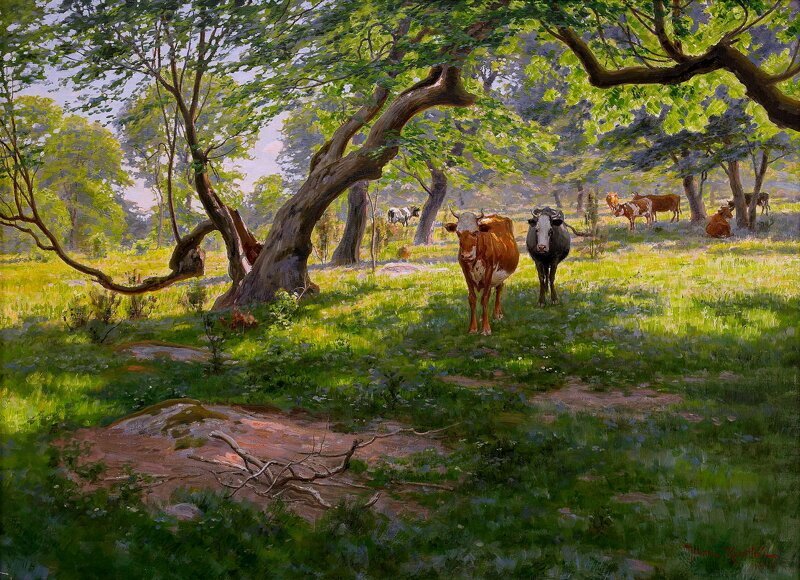
His works are characterized by their serene light, blooming
gardens, and peaceful depictions of life in and around his hometown of Linköping.Key Masterpieces
| Title | Year | Significance |
| Spring in the Garden | 1886 | His most famous work; won a gold medal at the 1889 Paris Salon. It depicts the Bishop’s garden in Linköping. |
| View of a Garden, Linköping | 1887 | An early masterpiece showing the Boman family; acquired by the Nationalmuseum in Stockholm. |
| Stony Landscape in Bohuslän | 1883 | A radical departure from traditional academic art, focusing on the raw, unembellished realism of the Swedish west coast. |
| Librarian Segerstéen in his Home | 1886 | A renowned interior portrait showing his patron surrounded by his art collection. |
| Sleeping Boy | 1883 | A poignant example of his early Realist phase, capturing a barefoot boy resting by a dirt road. |
Artistic Evolution
Krouthén’s career is often divided into two distinct periods:
The Rebel (1880s): He was part of the "Opponents" (Opponenterna), a group of young artists who broke away from the rigid Royal Swedish Academy. During this time, he spent time in Skagen, Denmark, painting alongside masters like P.S. Krøyer and Oscar Björck. His work here was starkly realistic and meticulously detailed.
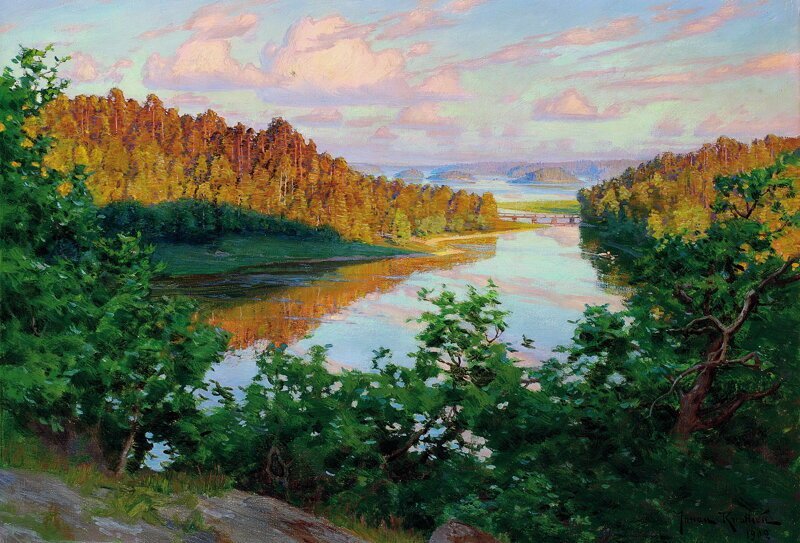
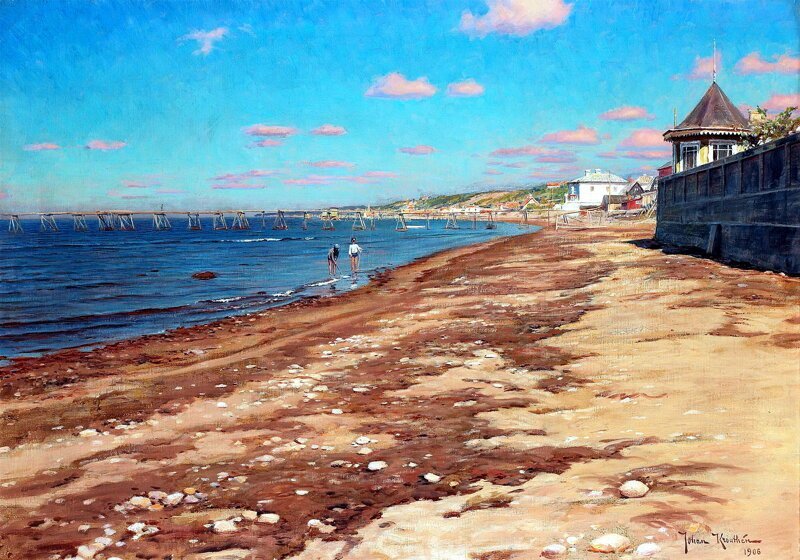
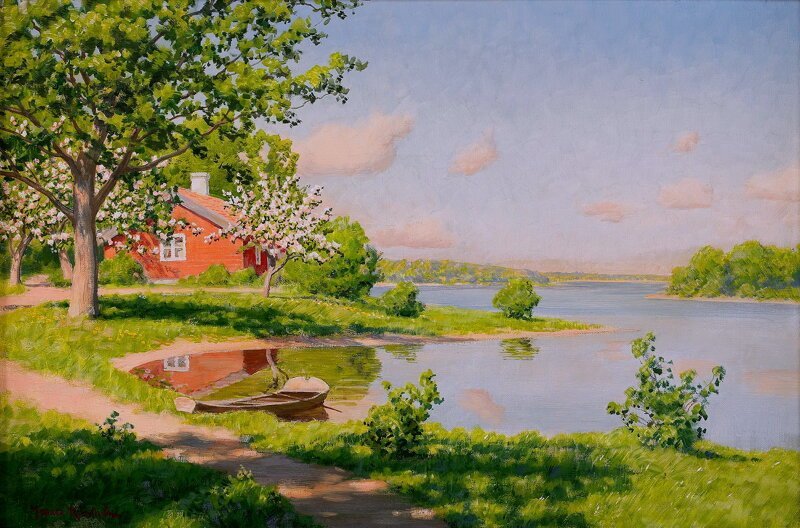
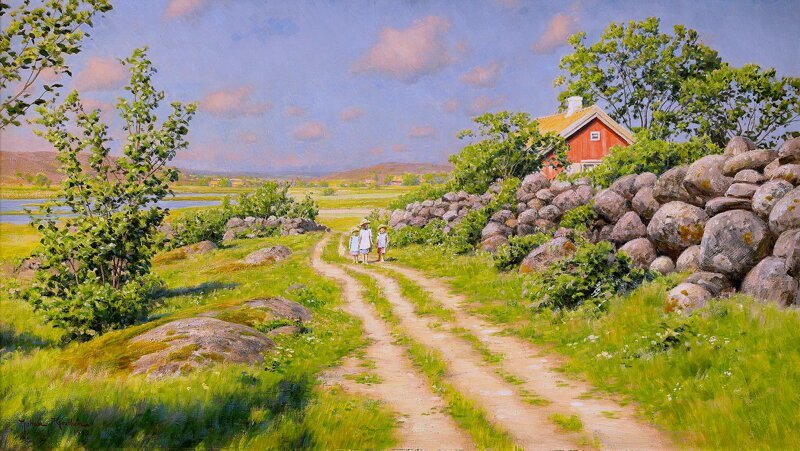
The Sun Painter (1890s–1932): Following the death of his first wife in 1891, his style shifted. He began painting the "bright idyll"—sun-drenched apple blossoms, red cottages with white trim, and children playing in lush gardens. These works were immensely popular and remains his most recognizable legacy today.
Where to See His Work
Nationalmuseum (Stockholm)
Östergötlands Museum (Linköping) – Holds the largest collection of his work.
Norrköping Art Museum
Gothenburg Museum of Art
.jpg)


No comments:
Post a Comment
Do Leave a Comment